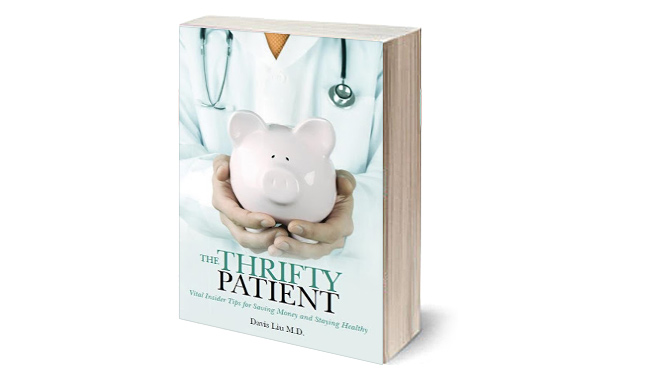


Book excerpt from The Thrifty Patient -Vital Insider Tips for Saving Money and Staying Healthy You Just D.A.T.E.D. Your Doctor You’ve told your story. Your doctor gets it. He has completed the physical exam. He formulates a plan to get you better. The next skill you should master may be as important as being a great storyteller. Your doctor has told you the treatment plan. Do you remember what you need to do? A 1996 study at the Mayo Clinic showed that patients remember less than half of what physicians tell them during office visits. Of nearly six hundred patients who were asked to recall what diagnoses physicians had discussed with them, 54 percent could not remember the major problems. Of patients whose doctors had discussed with them the risk factors for heart disease, 68 percent did not recall any discussion about tobacco use, 62 percent did not remember […] Read More »
Recent Articles
Make the Most Out of Your Doctor Office Visit – You Just D.A.T.E.D. Your Doctor!
Posted on June 27, 2014
Would Doctors and Patients Pick a Better Health Care System If They Saw It?
Posted on March 25, 2014
we believe Integrated will triumph Fragmented every time – Steve Jobs, Apple CEO Two articles recently got my attention. The first was an interview by Dr. Robert Pearl, CEO of the Permanente Medical Group with my favorite author and thinker Malcolm Gladwell. On Pearl’s on Forbes blog, he answered Gladwell’s request to tell people what is was like to be a doctor. The second was a NPR article “When Facts Are Scarce, ER Doctor Turns Detective To Decide On Care” by Dr. Leana Wen, patient advocate and author of the book When Doctors Don’t Listen. Both articles reminded me how doctors and patients have different realities simply by where they practice. As a practicing primary care doctor in an integrated health care system, which is partnered with a physician led medical group, these stories were quite foreign to me. These stories were once my reality in residency but no longer […] Read More »
Why Immunization Rates Will Fall – We Aren’t Listening
Posted on February 28, 2014
Why is it that illnesses that could be prevented by vaccination are on the rise despite scientific evidence they save lives? Recent articles noted measles exposure to people riding the Bay Area Rapid Transit (BART) public transportation system as well as more cases of whooping cough due to refusal to vaccinate and in some cases getting “non-medical” personal exemptions. The suggestion that vaccines could cause autism has been debunked. So why is this happening? Will more cases of preventable illnesses make the news? If we look at the research from Frank Luntz, the answer is yes. Frank Luntz would hardly be the right person to ask. Luntz is known for his work, particularly in politics, for polling and interpreting what the American public wants to hear. Luntz has a knack for advising Republican candidates, corporations, and speaking on Fox News and CBS. Though he is a professor at the University […] Read More »
Willpower Instinct – the Book Every Primary Care Doctor and Patient Should Read
Posted on January 30, 2014
In the spring of 2013, I heard Professor Kelly McGonigal speak at the Stanford Health Innovation summit and learned about her book, The Willpower Instinct – How Self-Control Works, Why It Matters, and What You Can Do to Get More of It. Fascinating, practical, and evidence-based, it is a book highly recommended for every primary care doctor and patient to read. McGonigal wants all of us to embrace our human nature, specifically that we have two minds in one brain. This setup often seems to thwart us from doing the necessary things to be and stay healthy. We have an emotional irrational mind. We have an analytic rational mind. By understanding these differences allows us the opportunity to be successful in what endeavors we pursue, like a New Year’s Resolution. After all, who doesn’t need more willpower? Over the past year, I’ve used many of the stories and strategies in […] Read More »
The Seven Pillars of High Performing Primary Care Practices – Part Two
Posted on January 9, 2014
In a previous post titled, “Is Making Primary Care More Professionally Satisfying as Simple as Lowering Panel Size” I observed that lowering panel size and implementation of an electronic medical record did not change how doctors worked. Those doctors who stayed late continued to stay late. Those who left earlier tended to continue to leave earlier. Within a health care organization often touted by many to be an example of how health care should be delivered in the country, this phenomenon existed. Why? Our doctors work in a very large multispecialty group practice. We use a common electronic medical record. Doctors in both primary care and specialty care can discuss cases, review information, and determine together with the patient the best course of action. Our primary care doctors have lower panel sizes than a decade earlier. This panel size is adjusted and normalized for patient age, medical problems, and other […] Read More »
 Get important exclusive advice and tips on how to save money while staying healthy.
 Learn how to make intelligent choices in America's Healthcare System.